
The Connector Landscape
by Frederic Cathomas
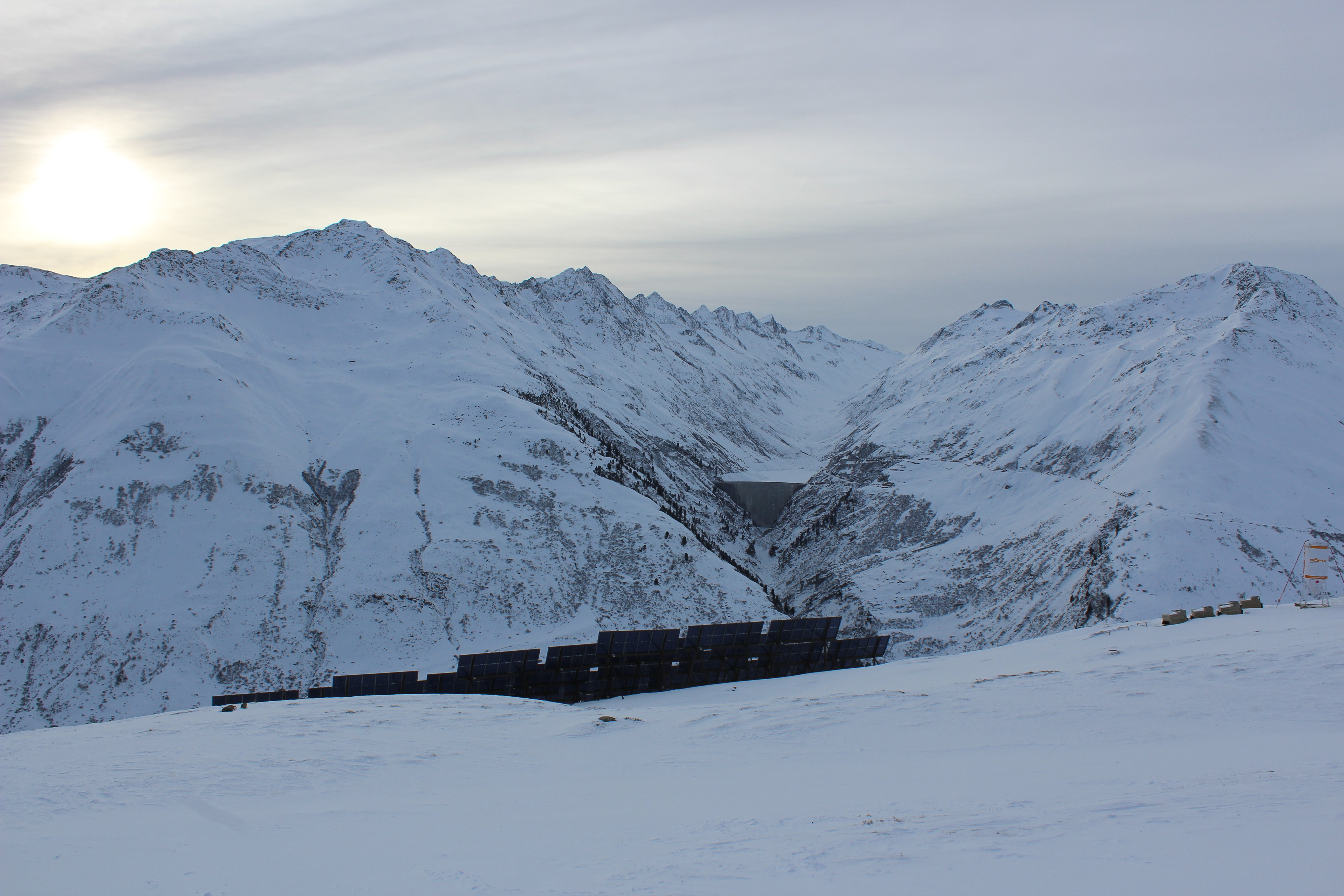
The Rhine begins as a trickle and ends at the sea. Between its source and its mouth, a landscape unfolds, one that is more than water, more than terrain. This essay follows the Tujetsch Valley and the village of Sedrun as a Connector Landscape: a place where rivers originate, energies circulate, and meanings travel. Through hydropower and tourism, through alpine imagery and solar ambition, Sedrun reveals how the local and the global are quietly entangled. To read this landscape is to follow a line, and to discover that orientation, like belonging, depends entirely on where you stand.
A Beginning Holds its End
A line in space can guide, divide, or suggest a movement. It can trace relations between bodies, ideas, or territories. The trajectory of the Rhine River connects places. I grew up near its source, where it still resembles a mountain stream. Seeing it turned for 90 degrees, reimagined, reminds me how orientation shapes belonging – how a familiar landscape can appear different when seen from another angle.
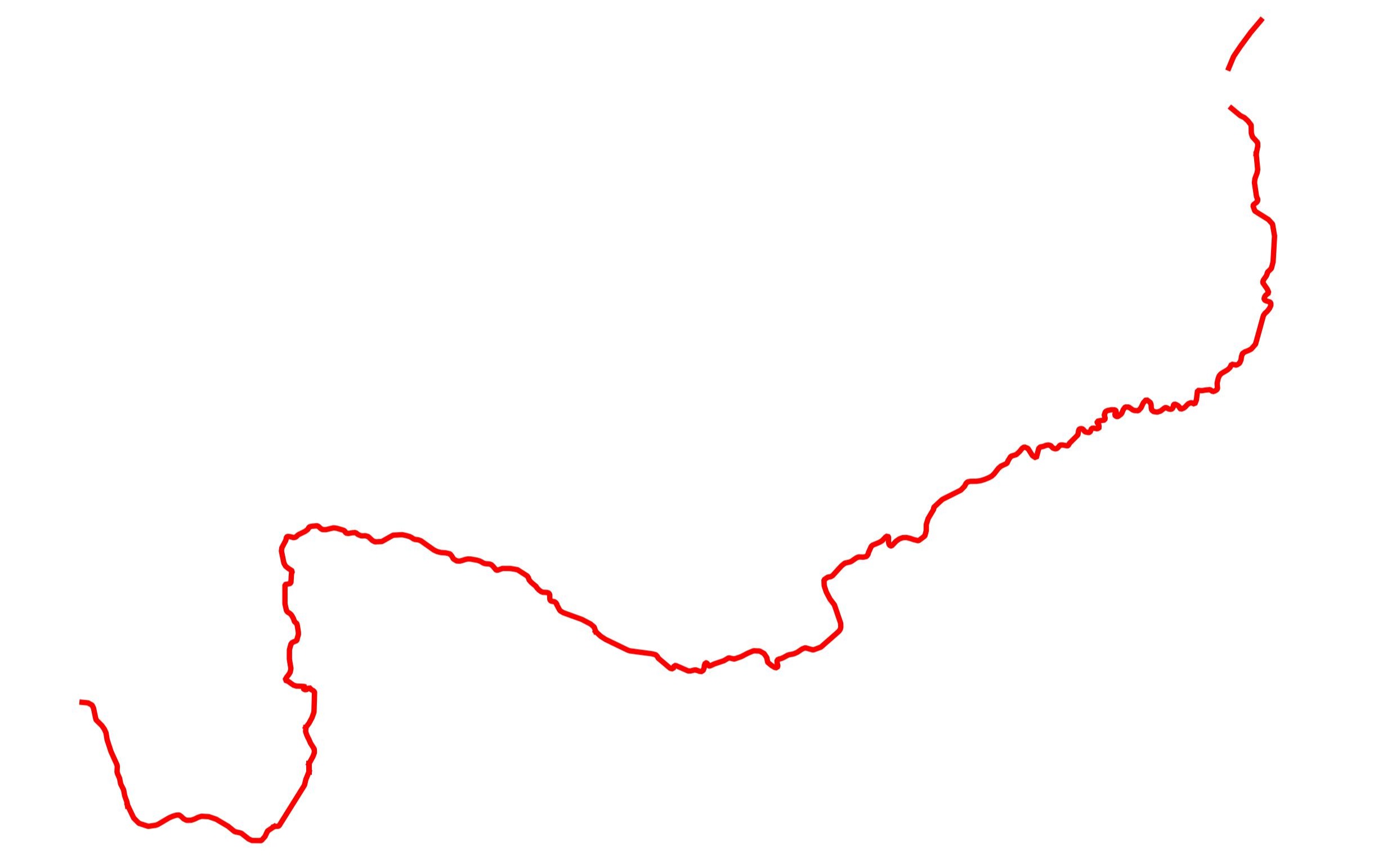
Seen from its source in the Tujetsch Valley, the Rhine is not yet the European artery it will become. Here, it is a trickle of alpine meltwater, flowing through meadows and rock before deepening into a system of transformation. Following the Rhine is a gradual widening from local landscape to continental network. In this sense, the river becomes more than a hydrological fact, I would like to introduce the Rhine as a figure for how places relate to the world beyond them. A Connector Landscape, as explored here, is both a metaphor and a method - a way to think about how natural forms and human systems overlap, how a valley in the Alps can mirror the complex entanglements of the world beyond.
This connection between origin and destination is already visible in the landscape itself. At the Oberalp Pass, just above Sedrun, stands an unlikely object: a lighthouse. Brought from Rotterdam, the Rhine’s endpoint, it now rises 2’046 meters above sea level, far from any sea it could guide. Conceived as a tourist curiosity, it waits without its imagined ship, stranded among peaks and clouds. It is a replica of the former front light from Hook of Holland, which once shone for seventy years at the mouth of the Rhine, now mirrored here at its source. Yet its presence is quietly revealing: the beginning of a river already holds its end.
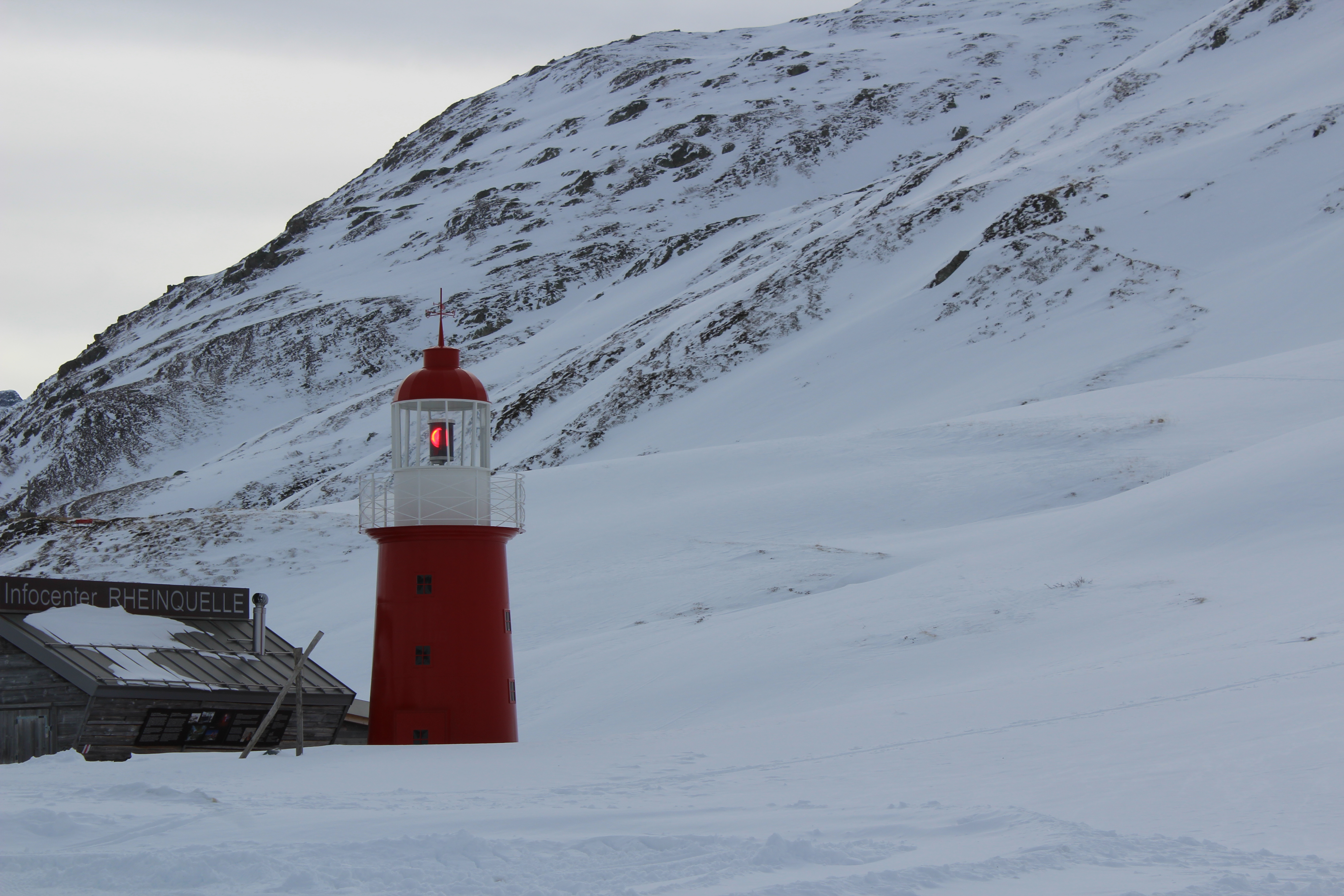
This project takes the Tujetsch Valley - and Sedrun at its centre - as a landscape of connections. Here, rivers begin, infrastructures converge, and meanings circulate. The focus is not on measurement or data, but on interpretation: a reading of landscapes as flows, attachments, and transitions.
The Imagined Alpine Landscape
Mountains, lakes, and valleys are not only geographic features but also carriers of meaning - symbols through which national identity is imagined. The Alps have long stood at the centre of Swiss imagination, mediating between nature and culture, wilderness and control.
The Alpine landscapes in Switzerland are represented as symbols of natural beauty and purity, with their significance growing over time. Initially, in the sixteenth and seventeenth centuries, naturalists and travellers highlighted the Alps’ natural virtues, emphasizing their purity and natural splendour. In the nineteenth century, the Alps became a central element of Swiss national identity, viewed as the birthplace of independence and liberty. This symbolic association was reinforced through literature, art, and cultural narratives, which portrayed the Alps not only as a natural landscape but also as a defining component of the Swiss character. Over time, they emerged as an iconic and essential element of Swiss cultural and national symbolism, reflecting both the physical landscape and the collective identity.
Today the Alpine landscape is depicted as a culturally shaped and largely managed environment where pristine wilderness is rare. Traditional views often regard Alpine landscapes as symbols of human victory, emphasizing well-tended and cultivated conditions rather than untouched nature. The depiction suggests a landscape strongly influenced by human activity.

The constructed image of the Alps is a powerful economic resource. Tourism has long been central to how Switzerland represents and sustains itself. Travellers’ fascination with the Swiss landscape reflects a broader cultural demand for nature, authenticity, and escape from urban life. The promise of physical and mental rejuvenation in pristine surroundings has defined the country’s appeal since the nineteenth century.
This romanticised focus on nature carries both opportunities and contradictions, where the tourism industry often plays a dual role: it can support environmental preservation, yet it also commodifies the very landscapes it seeks to protect. The “picturesque scenery” that draws visitors may fade under the pressure of its own popularity. Cable cars and ski facilities for instance extend accessibility and comfort, but they also blur the boundary between admiration and exploitation.
Performing the Alpine
In Sedrun, this tension between admiration and exploitation becomes tangible. The village embodies the image of pristine alpine life, yet its landscapes are carefully shaped. What emerges is a choreography of nature, culture and energy production - a place where the promise of natural beauty is sustained through constant intervention and through multiple layers.

Such as both material and symbolic. Located in the upper reaches of the Rhine, it stretches from the Oberalp Pass down toward Disentis, linking high alpine plateaus with densely settled valleys. Its meadows, slopes, and riverbeds bear the imprint of generations who have adapted to the rhythm of altitude, climate, and seasonality. Agriculture, once the backbone of local livelihoods, continues to mark the terrain through pastures and fences, but its role has become less central. Over time, new layers have been added: ski tourism reshaped the slopes with lifts, while energy infrastructures - dams and transmission lines - came to occupy the same spaces. These physical traces overlap and intertwine, forming a landscape where the pastoral, the recreational, and the industrial coexist. What might appear as an unbroken alpine panorama is a dense mosaic of human activities, each negotiating visibility and negotiating within the same confined terrain.
Yet the valley’s layers are not only physical; they are also cultural and imaginative. Tourism, for instance, projects an image of untouched alpine purity, even as it depends on technological control of snow and terrain. Hydropower structures, on the other hand, represent national narratives of progress and resilience, embedding local geographies within broader networks of production and consumption. These infrastructures shape how Sedrun and its surroundings are perceived not only as places of natural beauty but also as active participants in Switzerland’s modern identity. In this sense, the Tujetsch valley becomes a microcosm of the Alps as a whole. But looking further, there lies an ongoing negotiation between what is seen and what is sustained, a tension that anticipates the next layer of transformation, where energy landscapes increasingly define the contours of the alpine future.
Connective Energies
The energy infrastructures of the Tujetsch valley transform the landscape into a site of circulation and exchange. The network of dams, reservoirs, and power lines extends far beyond its steep topography, linking Sedrun to a national grid and a broader system of energy flows that power cities across Switzerland. Yet this connection is not only technical - it is cultural. The history of hydropower in the valley is inscribed into local narratives, shaping both the physical terrain and the collective sense of belonging and attachment to place.
The hydropower projects that began in the mid-twentieth century established a new spatial order, reconfiguring valleys and mountain spines into infrastructures of production. It’s not wrong to assume, that over time, the monumental presence of the dams became normalized, absorbed into the local identity as landscapes of progress and prosperity.
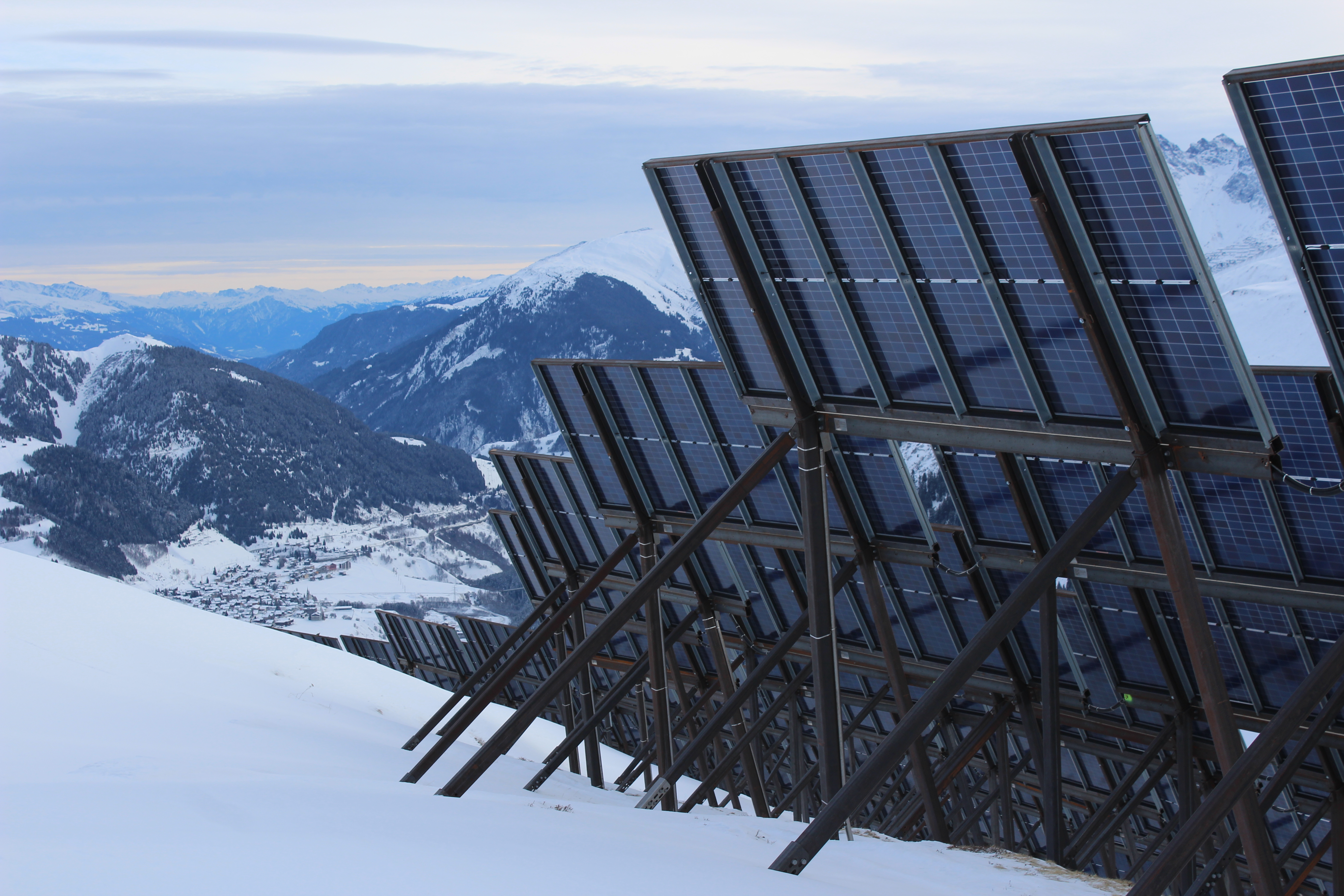
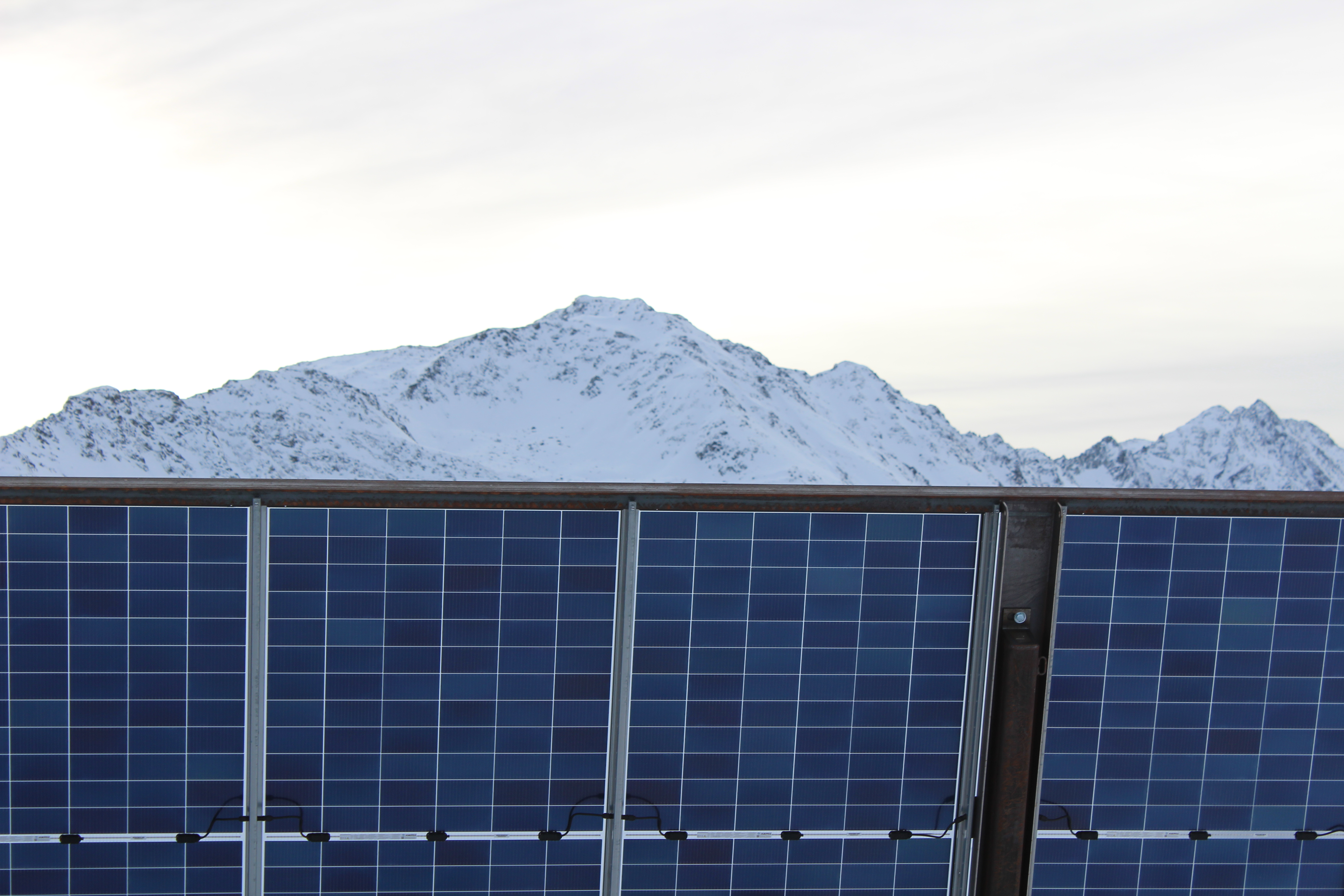
Today, these structures coexist with new forms of energy modernity - the projected solar projects Sedrun Solar and Nalpsolar. Unlike the dams, which harnessed the valley’s hydrological forces, these new infrastructures turn to its exposure, altitude, and sunlight, reimagining the Alpine environment as a future-oriented energy landscape.
How does energy production continue to shape the locality - economically, socially, and symbolically? Has the valley’s long history of hydropower made it more receptive to new technologies? The paradigm shifts from the dam era of the 1960s to today’s renewable expansion invites reflection on how landscapes of power evolve - and how their acceptance is negotiated. To what extent do these infrastructures express local visions of sustainability, and where do they reflect external demands tied to national targets or global climate imperatives?
These questions position the Tujetsch valley within a wider geography of energy transition. As hydropower meets solar expansion, Sedrun stands at the intersection of past and future imaginaries. The locality where the material realities of infrastructure are intertwined with cultural meanings of progress, resilience, and belonging. The valley’s energy landscape thus becomes more than a collection of technical systems: it is connective tissue linking the alpine landscape to the global, and a stage upon which the ongoing negotiation of modernity unfolds.
Sedrun as a Connector Landscape
Through the lens of the connector landscape, Sedrun and the Tujetsch Valley become more than a collection of places; they form a network of relations where flows of water, energy, and meaning overlap. The Connector Landscape, as I have approached it, is not only a metaphor but a way of thinking: an inductive method for reading landscapes as circulations rather than containers, as processes rather than forms. It reveals that locality does not end at the valley’s edge; it stretches outward, folded into national grids, tourist imaginaries, and connects with wider geographies of belonging.
Sedrun’s position captures this paradox vividly. Geographically, it lies on the margins of Switzerland; it’s remote, alpine, peripheral. Yet infrastructurally, it stands at the centre of national systems. Water from its mountains powers cities far beyond; visitors drawn by images of alpine purity animate its economy; policies and ambitions formulated elsewhere materialise here, in concrete, cables, and snow. What appears distant becomes central, and what seems isolated becomes essential. In this sense, Sedrun is not a landscape of retreat, but of transmission, a place through which energy, capital, and imagination flow.
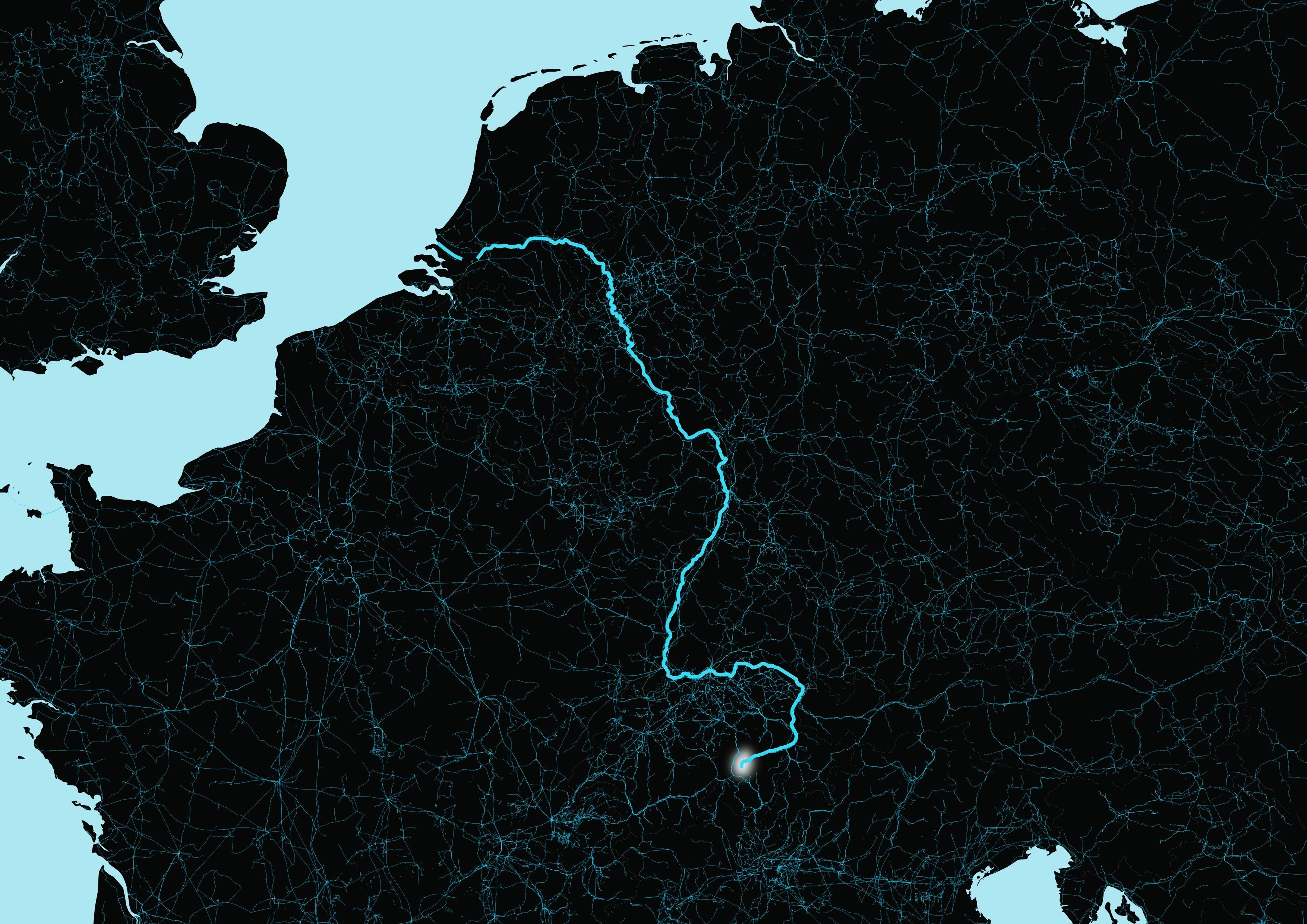 The map shows the Rhine’s path overlaid with Europe’s ground power grid, revealing how natural and built systems intersect.
 Orientation changes with perspective. When infrastructures reconfigure the landscape, they can both anchor and unsettle. Dams, transmission lines and solar parks inscribe permanence into the terrain, yet their scale and abstraction can produce distance; a sense of estrangement from what once felt immediate. Do such structures deepen attachment, integrating local identity into broader narratives of, for instance, progress? Or do they render the landscape less familiar, replaced by systems that serve elsewhere? The answer remains uncertain, suspended between pride and displacement.
Through the lens of the Connector Landscape, I came to see that landscapes do not only hold memories; they transmit relations between past and present, between the local and the global, between belonging and transformation. Perhaps to belong, finally, is not to remain fixed, but to remain connected, to follow the line, wherever it turns.
Literature
Bauer, N., Wallner, A., & Hunziker, M. (2009). The change of European landscapes: Human-nature relationships, public attitudes towards rewilding, and the implications for landscape management in Switzerland. Journal of Environmental Management, 90(9), 2910–2920.
Davis, D. K. (2011). Reading landscapes and telling stories: geography, the humanities and environmental history. In S. Daniels, D. DeLyser, J. N. Entrikin, & D. Richardson (Eds.), Envisioning Landscapes, Making Worlds - Geography and the Humanities (pp. 170–177). Routledge.
Energia Alpina. (2024). Sedrun Solar. Sedrun Solar AG. URL: https://sedrun-solar.ch. Accessed: 02.02.2026.
Ewald, K. C. (2001). The neglect of aesthetics in landscape planning in Switzerland. Landscape and Urban Planning, 54(1–4), 255–266.
Federal Office for the Environment FOEN. (2025, March 18). Water resource management. BAFU. https://www.bafu.admin.ch/bafu/en/home/topics/water/water--pressures/water-management/water-resource-management.html
Ingólfsdóttir, A. H., & Gunnarsdóttir, G. Þ. (2020). Tourism as a tool for nature conservation? Conflicting interests between renewable energy projects and wilderness protection in Iceland. Journal of Outdoor Recreation and Tourism, 29, 100276.
Jørgensen, D., & Jørgensen, F. A. (2018). Aesthetics of Energy Landscapes. Environment, Space, Place, 10(1), 1.
Mele, E., & Egberts, L. (2023). Exploring travel blogs on tourism and landscape heritage: representations of the Swiss Alps. Journal of Heritage Tourism, 18(6), 785–806.
Rickenbacher, J.-L. (2024, October 27). The power of water. Swiss National Museum. https://blog.nationalmuseum.ch/en/2023/10/the-power-of-water/
Salak, B., Spielhofer, R., Hunziker, M., Kienast, F., Hayek, U. W., & Grêt-Regamey, A. (2024). Erneuerbare Energien im Spannungsfeld gesellschaftlicher Ansprüche. Schweizerische Zeitschrift Fur Forstwesen, 175(4), 170–176.
Vuichard, P., Stauch, A., & Wüstenhagen, R. (2021). Keep it local and low-key: Social acceptance of alpine solar power projects. Renewable and Sustainable Energy Reviews, 138, 110516.
Zimmer, O. (1998). In Search of Natural Identity: Alpine Landscape and the Reconstruction of the Swiss Nation. Comparative Studies in Society and History, 40(4), 637–665.
LABLAB / LABLAB- AB (svb)
LÖVHOLMSBRINKEN 2B
117 43 STOCKHOLM